Quantifying secondary pharmacology antagonistic drug effects on platelet function
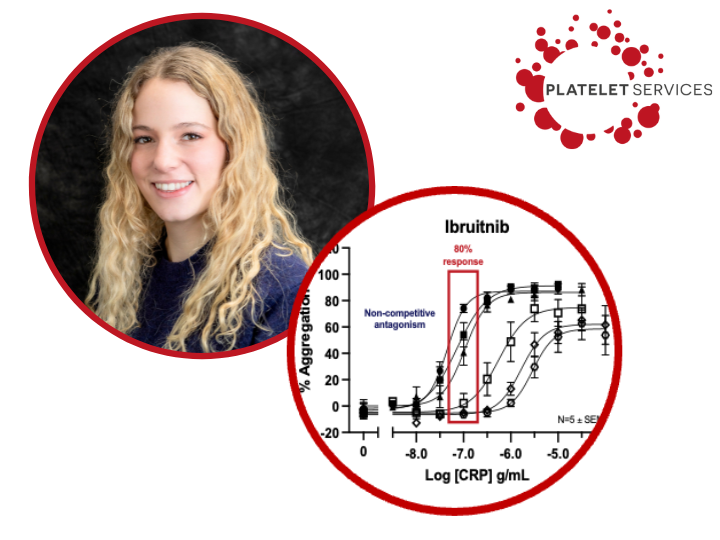
The development of new drugs is often limited or even halted by their side effects on platelet function. In drug discovery, identifying compounds that might have secondary pharmacological effects on platelet function can contribute to de-risking and help with the progression of potential new drugs. Half-maximal inhibitory concentration (IC50 or pIC50 (-log10IC50)), the concentration of […]
Therapeutic antibodies can have an effect on platelet function

Monoclonal antibodies (mAbs) are being discovered and developed as new therapeutic approaches to combat different diseases such as cancers, autoimmune diseases, HIV and more. Some immunoglobulin G (IgG) mAbs have been shown to affect platelet function with risk of thrombotic or bleeding side effects occurring in patients. They can induce platelet activation by different mechanisms […]
Platelet Function Testing in Target Safety Assessment

Adverse findings in non-clinical safety/toxicity testing continue to be a major reason for failure and/or complexity in drug projects. Since primary target-related toxicity plays a role in a significant proportion of these failures, an in-depth assessment of potential adverse consequences of target modulation can provide an important de-risking step in the discovery phase. Target Safety […]
Blog: Tyrosine kinase inhibitors can have an effect on platelet function
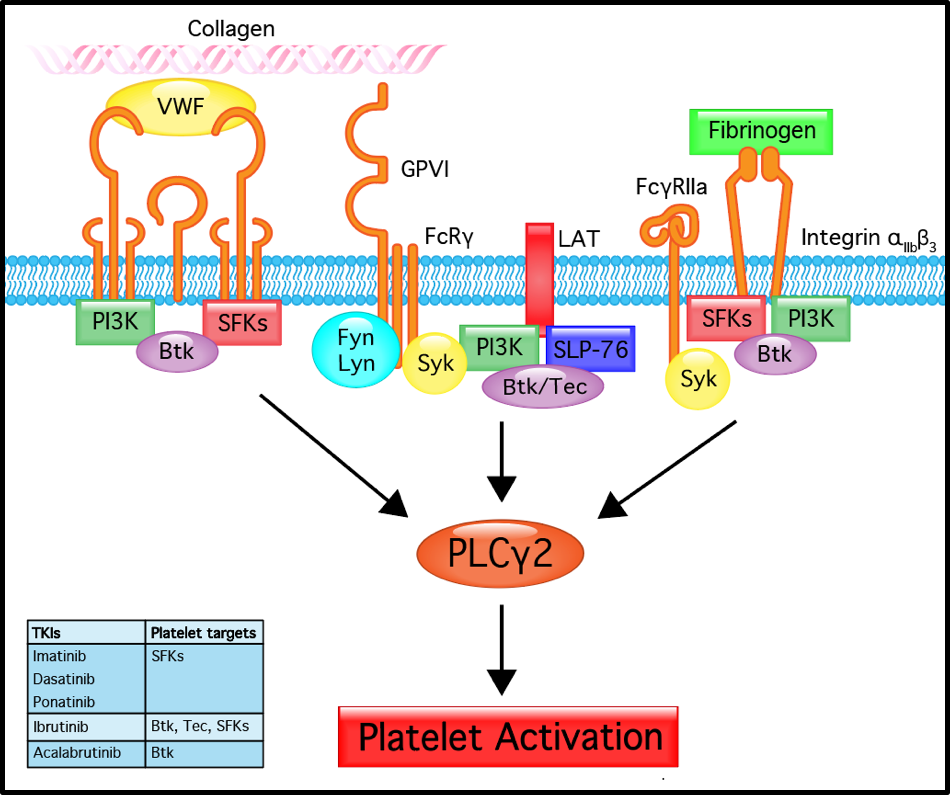
Tyrosine kinase inhibitors (TKIs) are widely used as a targeted strategy for cancer treatment. However, due to their broad kinase target spectrum, most TKIs inevitably have off-target effects. Platelet function has been shown to be inhibited by TKIs, as they rely on the activity of several tyrosine kinases, including Tec, Btk, SFK, Lyn, Fyn, Syk. […]